
Clinical Evidence: FSHD & LGMD
Objective Physical Transitions in Muscular Dystrophy
The following records detail the objective physical transitions observed in patients with Facioscapulohumeral Muscular Dystrophy (FSHD) and Limb-Girdle Muscular Dystrophy (LGMD) following intensive physical intervention with Cell Healer.
By directly applying highly dense biomagnetic fields to deeply indurated tissues around the scapula and pelvic girdle, structural clearance was achieved, leading to measurable expansions in Range of Motion (ROM) and physical changes in muscle volume.
Case 1: FSHD – Muscle Volume & Strength Transition (Male, USA)
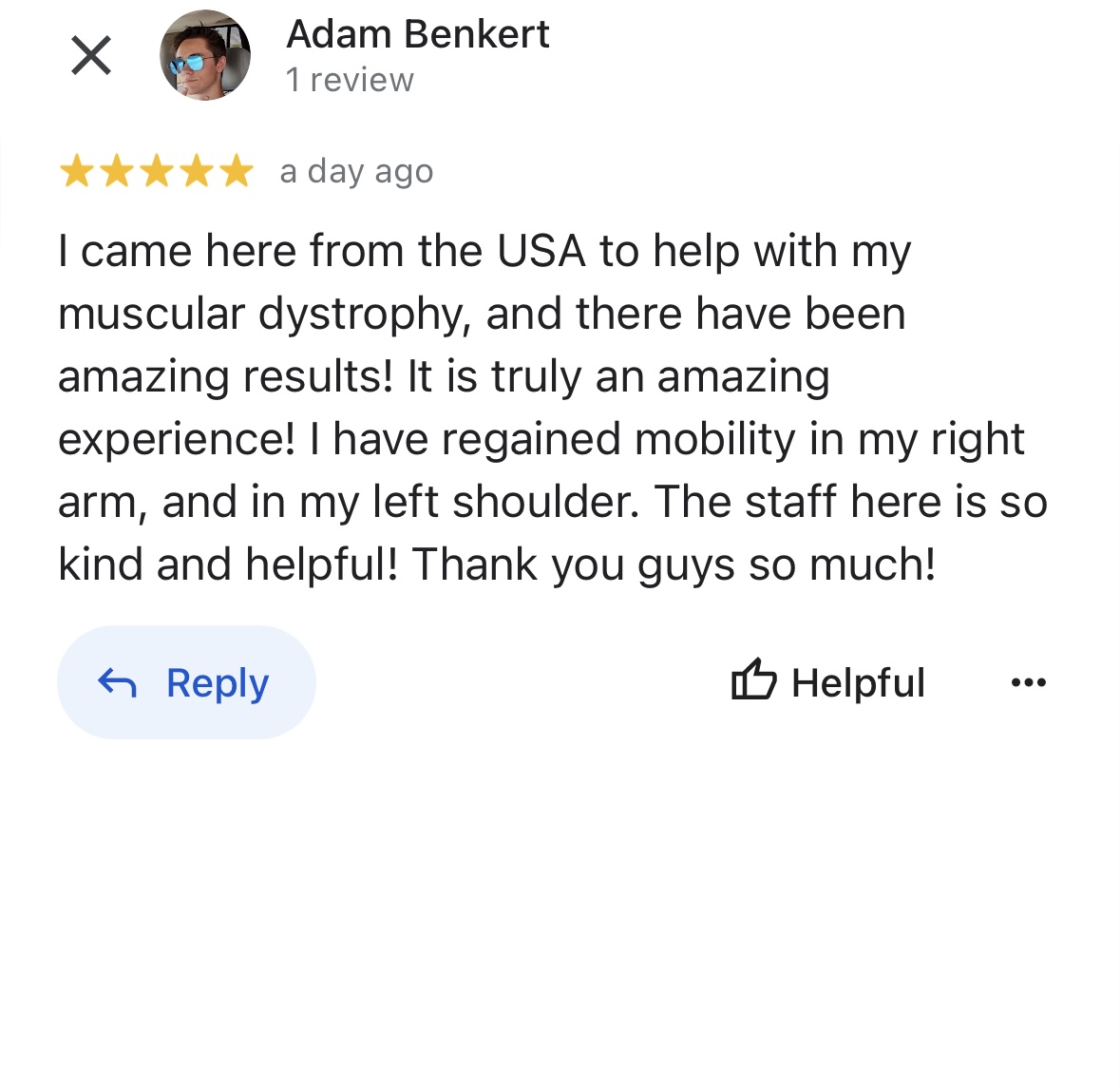
An observation record of intensive physical intervention utilizing biomagnetism over a 2-month stay for a male patient traveling from the United States diagnosed with FSHD. This case documents objective chronological data regarding physical transitions in muscle volume, strength, and upper limb mobility.
Client’s Voice & Physical Verification
“I came from the US wondering if this would work, and the results have been incredible. My right arm moves like it used to, and the movement in my left arm has also improved significantly.”
“Adam returned home a month earlier than planned. The results achieved during his stay are real. It is no exaggeration to call it a miracle!”


Case 2: FSHD – Gait & Lower Limb Elevation Transition (Female, 20s, Malaysia)
An observation record of a 12-week intensive physical intervention for a female patient from Malaysia. The focus was on physical functional transitions related to “gait function” and “fatigability,” which pose significant physical burdens in FSHD.
Phase 1: Transition in Lower Limb Function & Gait
Week 7: Transition in Lower Limb Elevation
The physical function of elevating the leg using the gluteal muscles with an extended knee was enabled. This physical improvement resulted in smoother limb advancement during walking.
Week 8: Transition in Fatigue & Physical Burden
Continuous physical intervention led to feedback confirming reduced fatigability during long-distance walking, indicating sustained functional improvement rather than a temporary reaction.
Phase 2: Ripple Effects on Facial and Upper Limb ROM
Week 6: Transition in Facial Expression & ROM
Physical changes were observed in the shape of the lips and the dynamic richness of facial expressions.
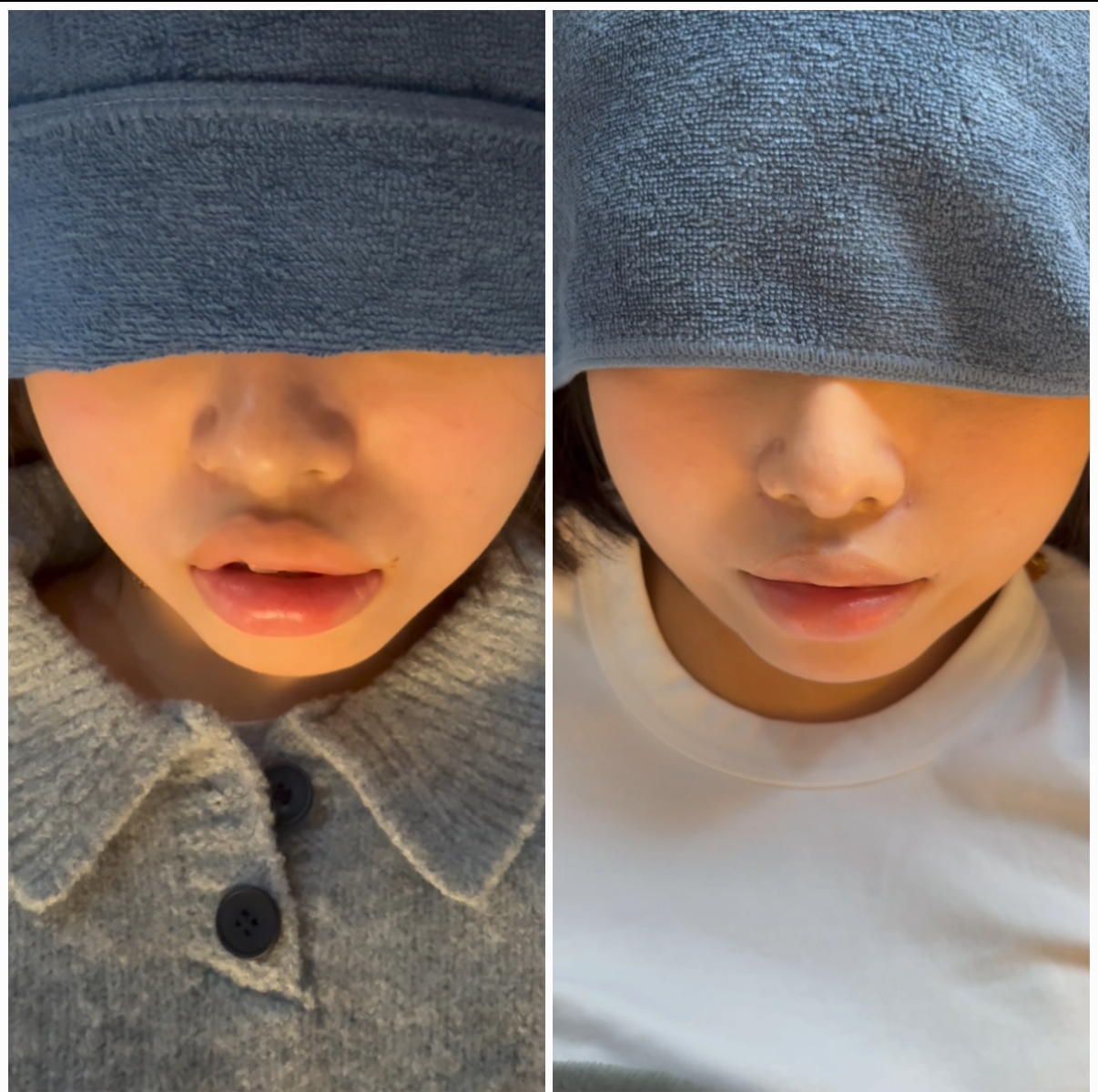 Comparison of physical lip shape transition over approximately one month.
Week 12: Transition in Scapular ROM
Along with gait stabilization, the muscle groups around the scapula—which exhibited rigidity initially—regained physical range of motion.
Case 3: LGMD – Upper Limb Elevation & ADL Transition (Female, 30s)
An observation record of a female patient with Limb-Girdle Muscular Dystrophy (LGMD). Over approximately 4 months of physical intervention, transitions in upper limb elevation and Activities of Daily Living (ADL) were recorded.
Observation: Improvements were confirmed in specific ADLs involving the elevation of the shoulder girdle, such as washing hair and reaching for objects in high places. A reduction in daily physical fatigue associated with these movements was also observed.