
Clinical Evidence: DMD & BMD
Observation Records of Physical Intervention in Pediatric & Growth Stages
The following records document the physical transitions observed in Duchenne Muscular Dystrophy (DMD) and Becker Muscular Dystrophy (BMD) during critical pediatric growth periods.
In pediatric cases, rapid functional decline and structural imbalances (such as scoliosis) frequently coincide with growth spurts. Our physical intervention utilizing Cell Healer aims to optimize the cellular environment beforehand, mitigating structural collapse and eliciting motor function preservation.
Case 1: DMD – 1-Year Gait & Motor Function Observation (Male, Age 8-9)
An observation record spanning one full year of physical intervention on a non-steroid utilizing DMD patient (Age 8-9). Medically, ages 8 to 10 represent a period highly susceptible to rapid motor function decline. By applying consistent physical intervention, we tracked chronological transitions in gait stability and fall frequency.
Observed a decrease in fall frequency and an upward trend in walking speed compared to pre-intervention.
Trunk function stabilized, leading to improved postural control during walking.
Recorded periods with zero falls per week. Enabled step climbing without hand support.
Falls drastically reduced to ~once a week. Standing and gait stability reached a high level of physical retention.
Case 2: BMD – Pre-Growth Spurt Muscle Volume Transition (Male, Age 10)
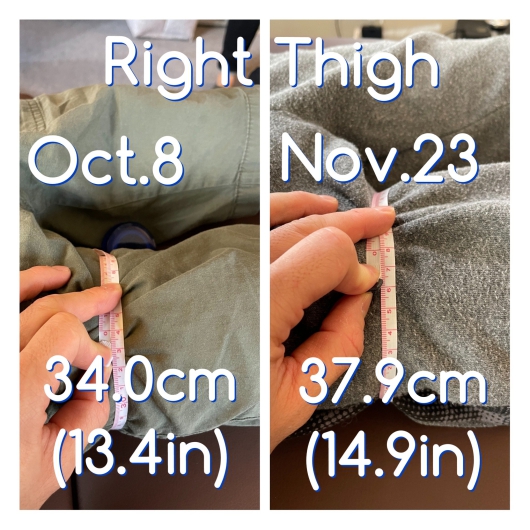
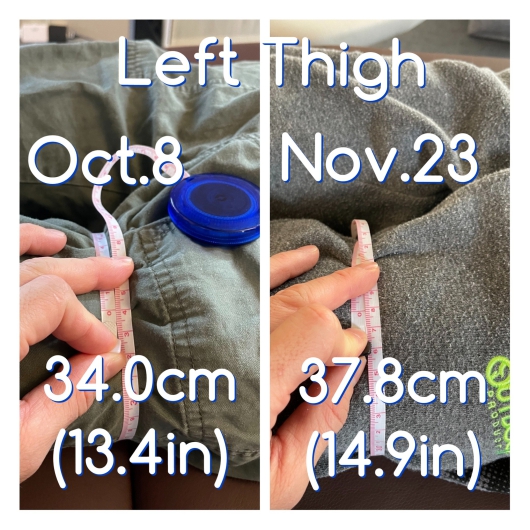
This case underscores the significance of intervening prior to the primary growth spurt. Rapid skeletal growth combined with muscular weakness often leads to scoliosis. By optimizing muscle conditions early, we successfully observed physical expansion in thigh circumference and functional enhancement without structural collapse.
Numerical Transition:
- Right Thigh: 34.0cm ➡ 37.9cm (+3.9cm)
- Left Thigh: 34.0cm ➡ 37.8cm (+3.8cm)
Immediate Motor Function Elicitation (Pre vs. Post Single Session)
The following videos document the immediate physical transitions in motor function before and after a single physical intervention session.
Observed elimination of knee trembling and instability during flexion/extension post-intervention.
A previously impossible bridge posture was enabled after 20-30 mins of intervention (Core Activation).
Alleviation of grip fatigue and restoration of smooth hand opening/closing mechanisms.